Digital Habits
four
4
[Montana, 2024]

Liber: Interrupting the Scroll

UX Design & Research — Montana State University | Bozeman, MT

Overview
one
1
The idea for Liber started as a UX design project to investigate the process of smartphone habit formation and the reasons why many existing tools for managing screen time are not successful in changing people’s behavior. The existing tools are often based on blocking certain applications or showing users their screen time statistics, but they don’t take into account the underlying drivers for phone use.

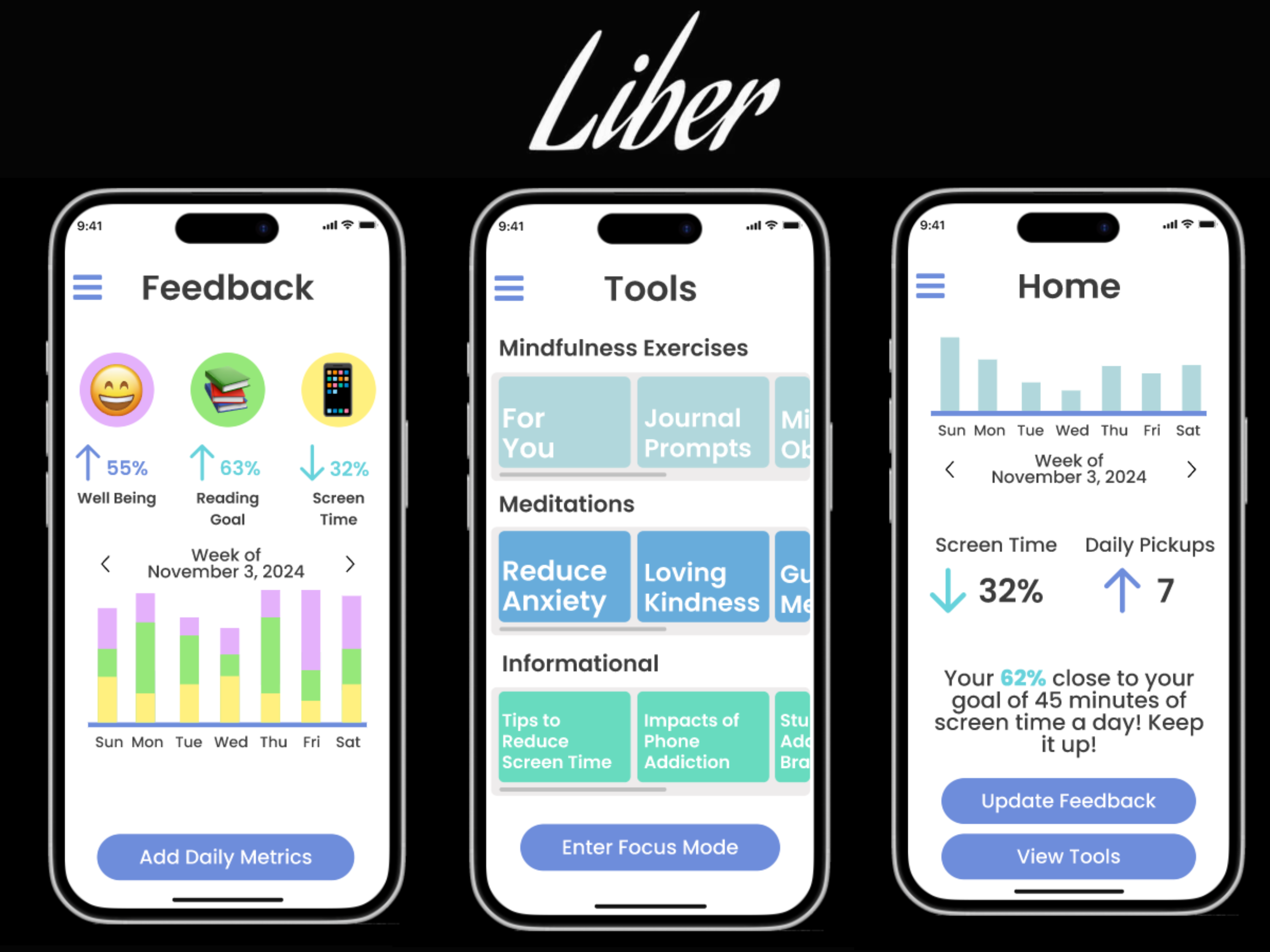
Liber was designed to take an alternative approach by adding tools to help users replace addictive tendencies. The app is designed to be a mobile application for tracking habits, setting goals, and influencing behavior to gradually reduce screen time. The idea is not to restrict phone time but to introduce certain changes to encourage better digital habits.
one
Photos of app layout
two
2
two
Approach
three
3
The design process started by conducting user interviews that centered on how users use their phones during the day. Participants frequently mentioned that they used their phones due to boredom, notifications, and fear of missing out. 

Using the information from the interviews, I created a mind map and some sketches to create a behavioral intervention strategy. Finally, I created a design for the interface in Figma that combined usage tracking with habit-building tools such as goal setting, progress feedback, and motivational prompts intended to interrupt automatic scrolling behavior.

three
Key Findings
four
4
User testing showed that participants found the app easy to navigate and believed the tools could help them reduce their phone use. More importantly, the interviews and testing reinforced that users were not simply looking for ways to block their phones, but for tools that help them recognize and interrupt habitual behavior.

Testing also highlighted how small design choices shape whether those tools are effective. Confusing navigation, unclear metrics like phone “pickups,” and redundant interface elements disrupted the experience. Participants emphasized the need for flexible interventions, suggesting alternatives such as journaling alongside meditation and recommending visual adjustments like clearer color contrast and optional dark mode.
four
Reflection
Designing Liber further emphasized the role of environmental cues in digital behavior. Participants would often reach for their phones almost instinctively rather than making a conscious choice to do so.

The project showed me the role of design in either continuing or disrupting digital habits. By leveraging both behavioral science and design, tools like Liber have the ability to go beyond tracking of screen time and create meaningful change with users and their relationship with technology.
five
five
5